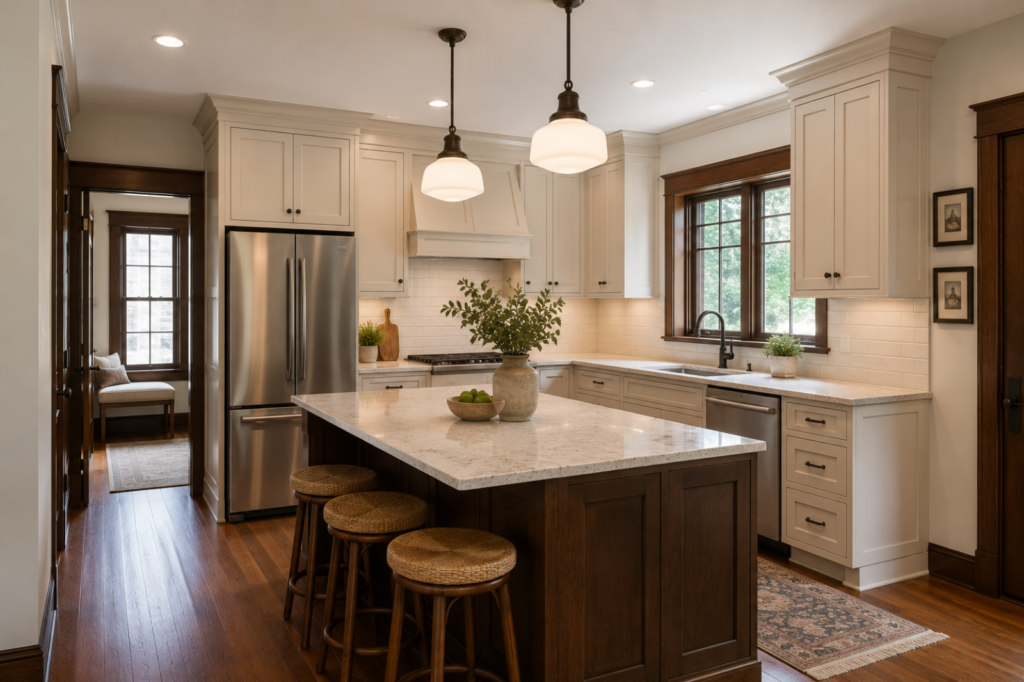

Not every kitchen needs a full remodel.
But not every kitchen can be fixed with surface-level updates, either.
One of the most important decisions homeowners make early on is how much renovation is actually needed — and whether a minor or major kitchen renovation makes sense for their home, goals, and timeline.
If you’re still defining scope, it can help to first walk through the broader kitchen remodel thought process for homeowners before deciding how extensive your project should be.
This article helps homeowners understand the difference, the tradeoffs, and how to choose the right path without over- or under-investing.
What Defines a Minor Kitchen Renovation?
A minor kitchen renovation focuses on improving the look and feel of the kitchen without changing the underlying structure or layout.
Common examples include:
- Replacing countertops
- Updating cabinet fronts or hardware
- New backsplash or lighting
- Painting or refinishing surfaces
- Appliance upgrades
These projects typically involve less disruption and shorter timelines.
If timeline is a major concern, reviewing realistic expectations around how long a kitchen remodel takes can help clarify what “minor” actually means in practice.
When a Minor Renovation Makes Sense
A minor renovation can be a smart choice when:
- The layout already works well
- Storage is adequate
- The kitchen feels dated but functional
- You’re preparing for resale in the near term
- You want improvement without major disruption
In these cases, targeted updates can refresh the space and improve perceived value without the complexity of a full remodel.
If resale value is part of the equation, it’s also worth understanding how different scopes influence kitchen renovation return on investment before committing to specific upgrades.
What Defines a Major Kitchen Renovation?
A major kitchen renovation goes beyond surfaces. It typically involves:
- New cabinetry
- Layout changes
- Structural or mechanical updates
- Flooring replacement
- Significant lighting and electrical work
These projects take longer, cost more, and require deeper planning — but they also offer the greatest opportunity to improve function.
If layout frustration is the root issue, revisiting the full kitchen remodel thought process for homeowners can help determine whether cosmetic changes will truly solve the problem.
When a Major Renovation Is the Better Choice
A major remodel often makes sense when:
- The layout causes daily frustration
- Storage is poorly designed
- Traffic flow doesn’t work for your household
- Multiple systems need updating
- You plan to stay in the home long-term
In these situations, surface updates may only mask deeper issues — and homeowners often end up remodeling again later.
Long-term homeowners especially benefit from thinking beyond surface value and considering both financial and lifestyle ROI, which we explore in more detail in our guide to kitchen renovation return on investment.
The Risk of Doing Too Little
One of the most common regrets we hear isn’t doing too much — it’s doing too little.
Examples include:
- New countertops on failing cabinets
- Updated finishes in a dysfunctional layout
- Partial upgrades that don’t solve daily problems
These decisions may feel safer in the moment but can reduce both lifestyle satisfaction and long-term return on investment. Understanding scope early helps prevent unnecessary second remodels later.
Cost, Disruption, and ROI Tradeoffs
Minor renovations generally:
- Cost less
- Take less time
- Offer quicker visual improvement
Major renovations:
- Require more planning
- Cause more disruption
- Deliver greater functional and lifestyle ROI
Neither option is “better” universally. The right choice depends on how you live, how long you plan to stay, and what problems you’re trying to solve.
If disruption and duration are key concerns, reviewing what affects how long a kitchen remodel takes can provide helpful context before finalizing scope.
How Planning Clarifies the Decision
Homeowners often start with a budget or a finish in mind — but the better starting point is understanding what isn’t working.
A thoughtful planning process:
- Reveals whether issues are cosmetic or structural
- Helps prioritize investment
- Prevents over- or under-building
- Connects scope decisions to long-term value
This is where a comprehensive look at both planning and kitchen renovation return on investment becomes especially helpful.
A Balanced Approach Is Often Best
Some of the most successful projects fall between “minor” and “major.”
Examples include:
- Keeping the footprint but replacing cabinetry
- Improving layout within existing walls
- Combining functional upgrades with restrained finishes
These hybrid approaches often deliver strong lifestyle benefits without unnecessary complexity — especially when homeowners fully understand the kitchen remodel thought process before construction begins.
Final Thoughts: Choosing the Right Scope
The goal of a kitchen renovation isn’t to do the biggest project possible — it’s to do the right project for your home. When scope aligns with real needs, homeowners tend to feel confident in their investment — both financially and emotionally. Whether that means a minor refresh or a full remodel, clarity upfront leads to better results long after the dust settles.
homeowners tend to feel confident in their investment — both financially and emotionally.
Whether that means a minor refresh or a full remodel, clarity upfront leads to better results long after the dust settles.