
A step-by-step guide to planning a full home renovation in Des Moines, Ankeny, and West Des Moines—scope, phasing, timelines, and how to keep everything cohesive.
Key Takeaways
- A full home renovation succeeds when scope, phasing, and selections are locked before demo.
- Plan from the inside out: layout, structure, and systems first; kitchens, bathrooms, flooring, and trim next; paint and hardware last.
- Build for cohesion—carry casing profiles, baseboards, colors, and lighting language throughout for a “meant-to-be” finish.
- Partner with a local renovation contractor who understands Central Iowa homes, permitting, and live-in construction.
A full home renovation is more than a larger version of a single-room remodel—it’s a coordinated sequence of decisions that touches structure, systems, and finishes across the entire house. Done right, it solves long-standing pain points (layout, storage, lighting) and creates a cohesive style that feels original to your home. Done hastily, it can mean change orders, delays, or mismatched rooms.
At Reese Builders, we plan and deliver full home renovations in Des Moines, Ankeny, and West Des Moines with a process that keeps your budget, schedule, and daily life in view from day one.
What counts as a “full home renovation”?
While every project is different, most whole-home scopes include some mix of:
- Layout updates (opening or repositioning walls, adding cased openings, reworking stairs or circulation)
- Systems (electrical updates, plumbing reroutes, HVAC balancing and new returns/supplies)
- Kitchen remodeling and one or more bathroom remodels
- Flooring replacement or refinishing for continuity
- Windows/doors updates for efficiency and light
- Trim carpentry and millwork to tie spaces together (crown, casing, base, wainscoting)
- Lighting and paint to unify the look
If you’re also adding square footage, see our additions guides—many clients pair a whole-home remodel with a strategic bump-out or new suite.
Phase 1: Plan scope, budget, and live-in strategy
Before drawings or demo, align on:
- Goals and priorities: resale vs. forever home; storage and flow vs. pure aesthetics
- Budget with contingency: establish allowance categories (lighting, plumbing fixtures, hardware) and keep a 10–15% contingency for surprises common in older Central Iowa homes
- Live-in vs. move-out plan: we routinely renovate occupied homes using dust control, daily cleanup, and room-by-room sequencing
Phase 2: Design the shell before the shine
Solve the big moves first.
- Structure: identify load-bearing walls; plan beams or posts if you’re opening rooms (especially in split-levels and 1990s builds)
- Circulation: improve clearances, widen cased openings, and rationalize hallways so daily movement feels natural
- Systems: right-size circuits, add dedicated lines for kitchen appliances, and balance HVAC to match new layouts
Only after these are set should you finalize cabinetry, tile, countertops, and finish schedules.
Phase 3: Cohesion is everything
The hallmark of a great whole-home remodel is consistency.
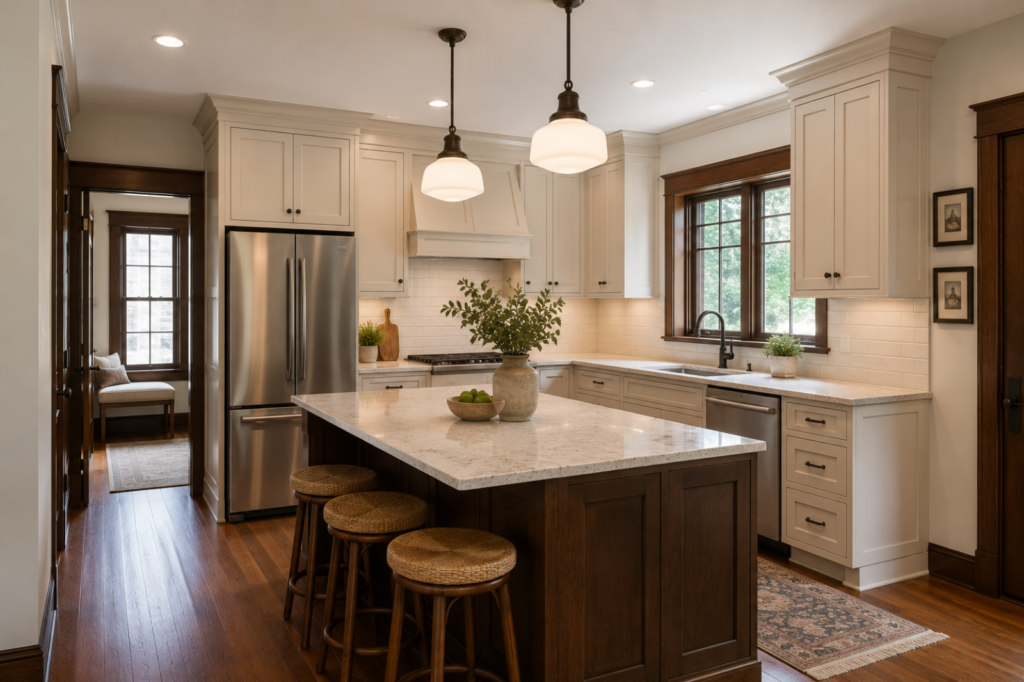
- Trim and profiles: carry casing, baseboard heights, and crown details throughout for a continuous language. Our custom carpentry team can match or recreate profiles to blend old with new.
- Flooring and color: choose a main-level floor strategy (refinish, replace, or transition) and a paint palette that ties rooms together.
- Lighting: repeat finishes and forms so fixtures relate without being identical; layer ambient, task, and accent lighting house-wide.
Phase 4: Scheduling and selections (the change-order antidote)
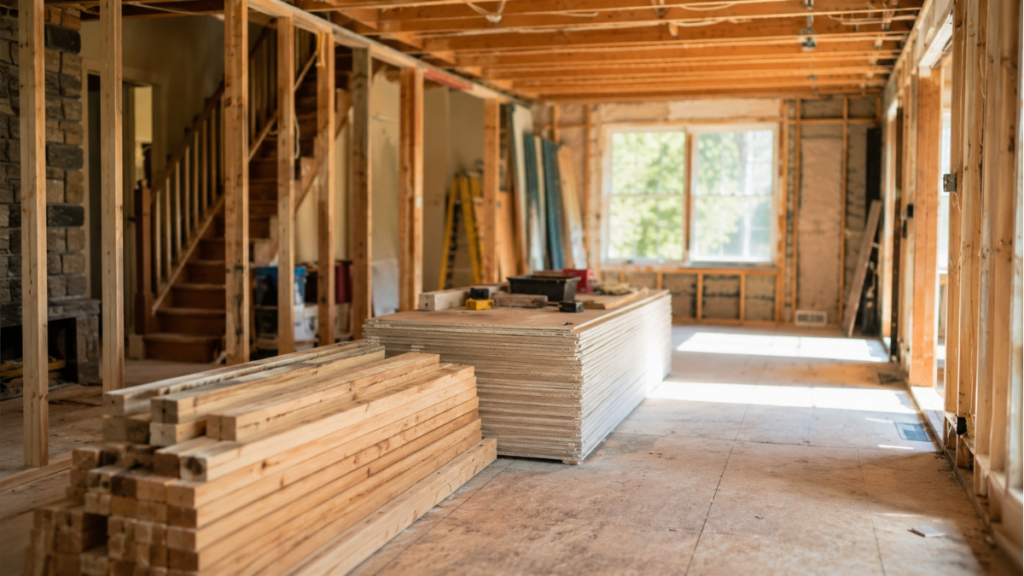
Lock selections—cabinets, counters, tile, plumbing, lighting, hardware—before demo. This protects the timeline, allows accurate rough-ins, and reduces costly changes. Your production schedule should show milestones: demo, framing, rough-ins, inspections, insulation/drywall, trim/paint, install, punch.
Phase 5: Build with protection and communication
In a full home renovation, you’ll live with the process for weeks. Expect:
- Dust barriers and floor protection
- Clear site hours and weekly updates
- A single point of contact for decisions
- Organized punch and close-out with labeled touch-up kits and care notes
When does a full home renovation make the most sense?
- Your layout is dated (compartmentalized kitchen/living, poor storage, dark halls)
- Multiple rooms need coordinated updates (kitchen + baths + flooring)
- You want one cohesive style rather than piecemeal fixes
- You’re preparing a long-term home and want to “do it once, do it right”
If you’re unsure whether to renovate all at once or in stages, we can create a phased plan that prioritizes impact and protects future work.
Helpful Links from Our Blog
- Showing Up When It Matters Most
- Choosing the Right Home Addition Contractors in Des Moines
- Kitchen Remodel Des Moines: What to Know Before You Start
- Small Kitchen Remodel Tips: Maximize Space and Style
- Top Kitchen Remodeling Trends in Iowa for 2025
- Custom Trim Carpentry: Add Character to Your Des Moines Home
- Split Level Home Kitchen Remodel: Transform Your Layout
- Everything You Need to Know About Home Additions in Iowa
- Choosing the Right Bathroom Remodeler for Your Des Moines Home
- Bathroom Remodel Des Moines: What to Know Before You Start
- Top Bathroom Remodeling Projects in Des Moines
A full home renovation in Des Moines is a chance to reset your layout, modernize systems, and create a unified style that fits your life. Success comes from planning structure and flow first, locking selections early, and keeping craftsmanship consistent across every room. With the right team, the result feels like the home you loved—only better.
Planning a whole-home remodel in Des Moines, Ankeny, or West Des Moines?
Contact Reese Builders to schedule a no-pressure consultation. We’ll map your scope, sequencing, and selections—and build a plan that respects your timeline and budget.
FAQs
How long does a full home renovation take?
Most whole-home projects run several weeks to a few months after design, selections, and permitting. Scope and season drive timing.
Can we live in the house during the renovation?
Often, yes. We plan phases, dust control, and temporary setups to keep you as comfortable as possible.
Do I need an interior designer or architect first?
Not required. We can design-build, or collaborate with your architect/designer if you already have plans.
How do you keep a consistent look across rooms?
We set trim profiles, flooring strategy, lighting language, and a core palette early—then carry them through the entire home.
Do you handle permitting and inspections?
Yes. We manage permits, inspections, and code compliance across all trades as part of our process.