
Most homeowners don’t go into a remodel trying to cut corners.
If anything, it’s the opposite.
They want to do it right. Choose quality materials. Make decisions they won’t regret in five or ten years.
But somewhere along the way, a different question starts to come up:
“Where does it actually make sense to spend more, and where doesn’t it?”
Because not every upgrade adds value in the same way. And in some cases, spending more doesn’t improve how the space feels or functions at all.
Not All “High-End” Decisions Are Equal
One of the biggest misconceptions in remodeling is that a higher budget automatically leads to a better result.
In reality, what matters more is where that budget is applied.
We’ve seen projects where:
- The finishes were high-end, but the layout still didn’t work
- Expensive features were added—but rarely used
- Design decisions looked good—but didn’t improve daily life
And on the other hand:
- Thoughtful layout changes made a space feel completely different
- Simple material choices—done well—felt more refined than expensive ones done poorly
The goal isn’t to spend more.
It’s to invest in the parts of your home that actually change how it works and feels.
Where It Usually Makes Sense to Invest
1. Layout and Flow
This is almost always the most valuable place to invest.
Changing how a space functions:
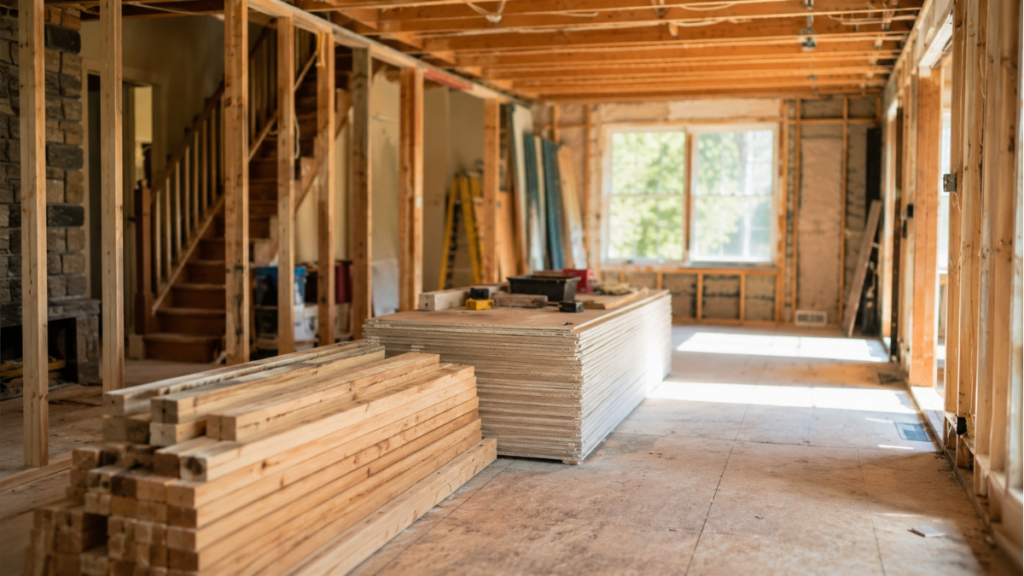
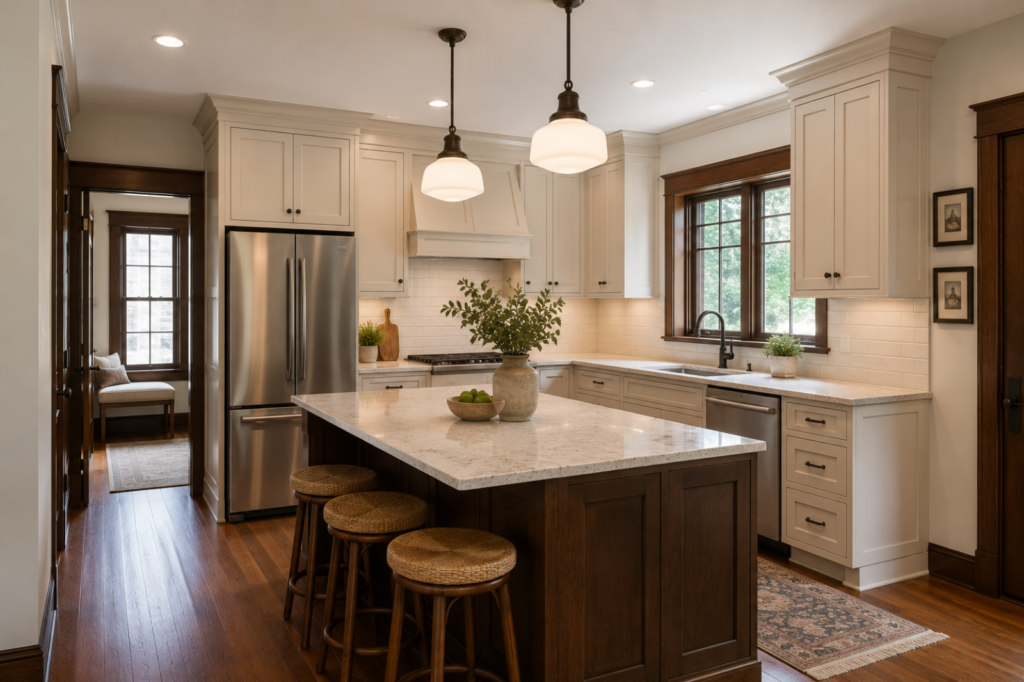
- Opening up a kitchen
- Improving circulation
- Fixing awkward layouts
These decisions affect how you live in the space every day.
And unlike finishes, they’re not easy to change later.
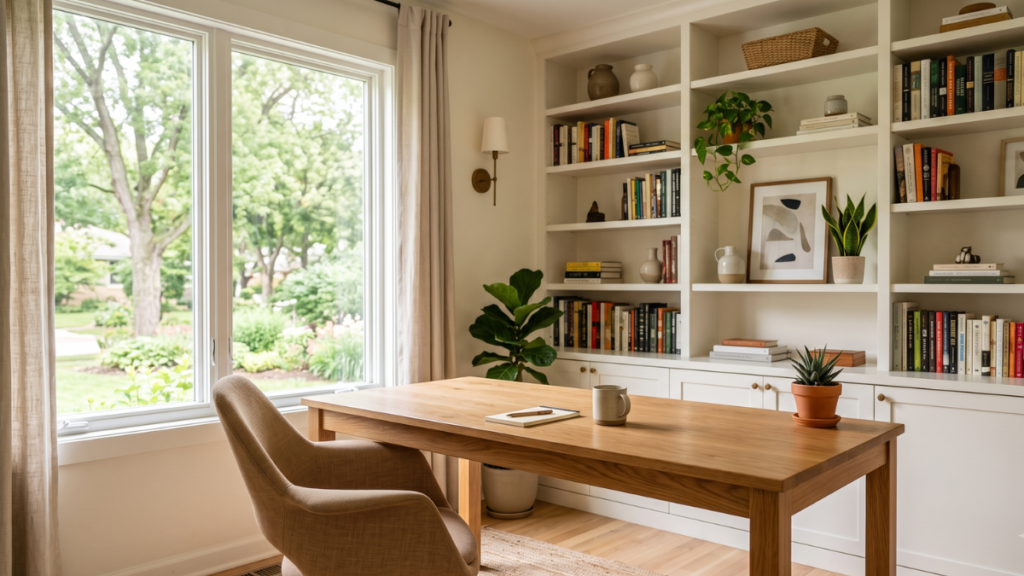
2. Cabinetry and Built-Ins
In kitchens, bathrooms, and living spaces, cabinetry does a lot of heavy lifting:
- Storage
- Organization
- Visual impact
Well-built cabinetry:
- lasts longer
- functions better
- feels more integrated into the home
This is one of the areas where quality is noticeable over time—not just on day one.
3. Planning and Design
This isn’t something homeowners always think of as an “investment,” but it should be.
Spending time upfront on:
- layout decisions
- material coordination
- realistic expectations
…prevents costly changes later.
It also leads to a more cohesive final result.
4. Details That Get Touched Every Day
Some of the most worthwhile upgrades are the ones you interact with constantly:
- Drawer hardware
- Plumbing fixtures
- Cabinet functionality (pull-outs, organizers)
These aren’t always the most expensive line items—but they shape your day-to-day experience.
5. Lighting
Lighting is often underestimated.
But it affects:
- how a space feels
- how materials look
- how functional the room is
Layered lighting (ambient, task, accent) can elevate a space more than a single high-end feature.
Where It Often Makes Sense to Be More Thoughtful
This doesn’t mean “cut corners.” It means being intentional.
1. Trend-Driven Features
Some features look great in the moment—but don’t age well.
If a decision is based mostly on:
- current trends
- what you’re seeing online
…it’s worth pausing and asking how it will feel a few years from now.
2. Over-Spec’ing Materials
There’s a point where upgrading materials doesn’t meaningfully change the outcome.
For example:
- extremely high-end finishes in low-impact areas
- upgrades that don’t affect durability or function
In many cases, a well-chosen mid-to-high range option delivers the same result in daily use.
3. Features That Look Good, but Don’t Get Used
We’ve all seen this:
- specialty appliances that rarely get used
- built-ins designed more for appearance than function
If it doesn’t support how you actually live, it’s worth reconsidering.
4. Trying to Do Everything at Once
Many high-end remodels don’t happen all at once—and that’s okay.
In fact, phased projects often lead to better decisions:
- more time to think through details
- better allocation of budget
- less decision fatigue
The Bigger Picture: It’s Not Just About Budget
Most homeowners aren’t trying to minimize cost.
They’re trying to avoid regret.
And that usually comes down to:
- making decisions too quickly
- investing in the wrong areas
- not fully thinking through how the space will be used
This is why planning matters so much.
It’s also why reviewing things like common renovation mistakes and how to avoid them can be helpful early in the process.
How to Think About It Moving Forward
A Simple Way to Think Through Your Investment Decisions
Before committing to upgrades, this can help you evaluate what’s actually worth it for your home.
Function First
- ☐ Does this improve how we use the space every day?
- ☐ Will this solve an existing frustration?
- ☐ Is this something we’ll notice regularly?
Longevity
- ☐ Will this still feel right in 5–10 years?
- ☐ Is this durable enough for daily use?
- ☐ Is it easy to maintain?
Return on Experience
- ☐ Will this make daily routines easier?
- ☐ Will we actually use this regularly?
- ☐ Does this improve comfort or convenience?
Priority Check
- ☐ Is this more important than layout or function?
- ☐ Would we still choose this if budget were tighter?
- ☐ Are we choosing this for us—or just because it looks good?
The best investments are the ones that continue to improve how your home feels and functions over time—not just how it looks on day one.
If you’re starting to plan a remodel, a better question than “what should we upgrade?” is:
“What will actually improve how we use this space every day?”
That shift changes everything.
It leads to:
- more thoughtful decisions
- better long-term satisfaction
- and a home that feels right—not just looks impressive
Closing
A high-end remodel isn’t defined by how much is spent.
It’s defined by how well the decisions are made.
Where the investment is intentional.
Where the layout works.
Where the details hold up over time.
Because in the end, the goal isn’t just a beautiful result.
It’s a home that continues to feel right long after the project is finished.
Have questions or ready to start your remodel? Give us a call or book a free consult.
Remodel Investment FAQ
Where should I spend the most money in a remodel?
Focus on layout, cabinetry, and planning. These have the biggest long-term impact on how your home functions.
What upgrades are not worth it?
Features that are rarely used, trend-driven elements, or overly expensive materials that don’t improve durability or function.
Is it better to remodel everything at once?
Not always. Phased remodels often lead to better decisions and less pressure.
How do I know if something is worth the investment?
Ask whether it improves daily life, solves a problem, or will still feel right years from now.